For millions battling mental health conditions or neurological disorders, traditional treatments often come with trade-offs: medications may cause cumbersome side effects, while invasive procedures carry inherent risks. Today, QIJIA is revolutionizing care with its advanced non-invasive Transcranial Magnetic Stimulation technology—offering a safe, effective alternative that prioritizes patient comfort without compromising clinical outcomes. Whether you’re seeking RTMS equipment for depression, a Transcranial magnetic stimulator for psychiatric disorders, or TMS equipment for neurological rehabilitation, QIJIA’s innovative solutions are redefining what’s possible in brain health care.
Core Technology & Working Principle: The Science Behind QIJIA’s TMS
At the heart of QIJIA’s offering lies the proven science of Transcranial Magnetic Stimulation, a non-invasive neuroregulation technique rooted in electromagnetic induction. Unlike invasive brain stimulation methods, QIJIA’s device uses a specialized coil to deliver focused, pulsed magnetic fields that penetrate the skull without attenuation. These magnetic pulses induce mild electric currents in targeted brain regions, precisely regulating neuronal activity and restoring the balance of neurotransmitters—key to addressing a range of mental and neurological conditions.
A standout feature of QIJIA’s technology is its low-magnetic design. By optimizing magnetic field intensity and focus, the device achieves therapeutic effects while minimizing unnecessary stimulation to surrounding brain tissue. This precision ensures targeted treatment of affected areas, laying the foundation for its safety and efficacy across diverse applications.
Simple & Comfortable Treatment Process
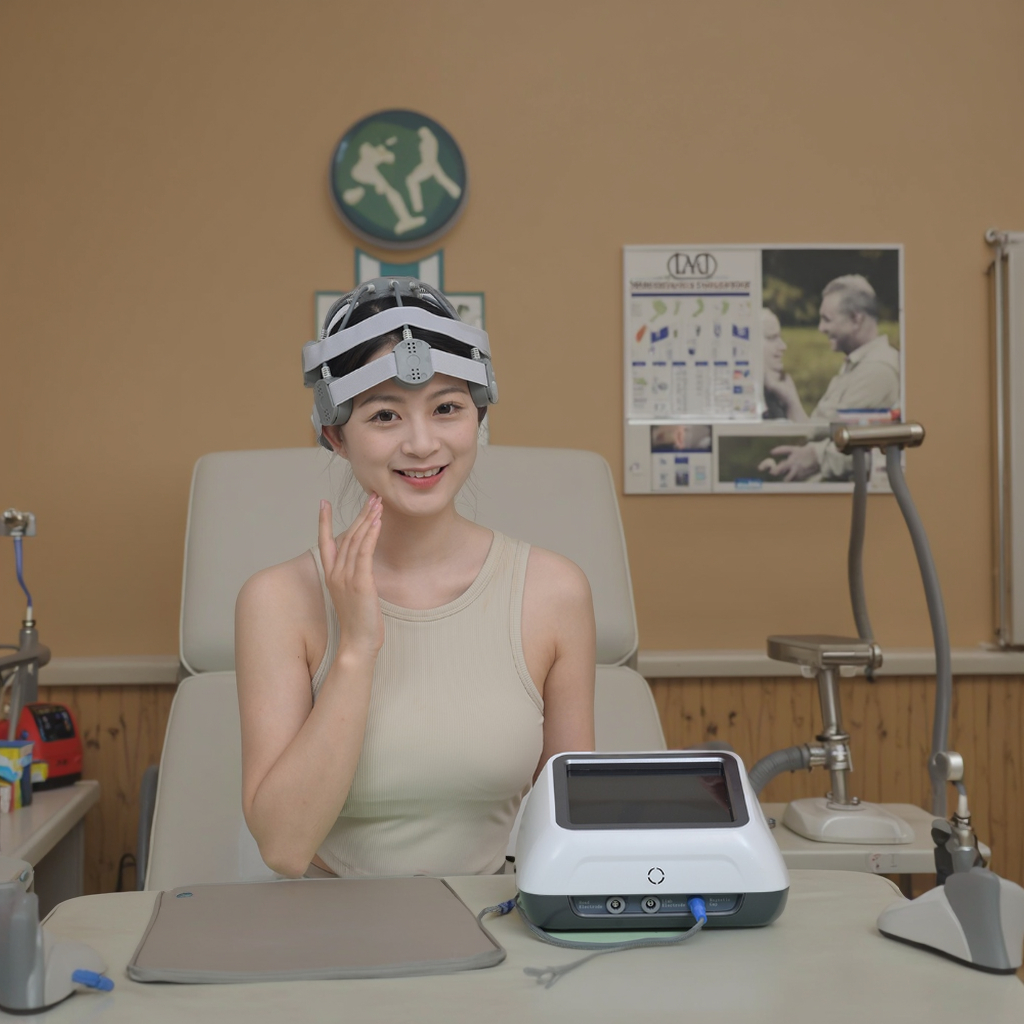
QIJIA’s Transcranial Magnetic Stimulation devices are engineered for user-friendliness, making them suitable for both clinical settings and at-home use (under professional guidance). The treatment process is streamlined and pain-free, typically lasting 15-30 minutes per session:
- Target Localization: A clinician uses a precise positioning system to align the coil with the specific brain region needing stimulation (e.g., prefrontal cortex for depression).
- Parameter Customization: Based on the patient’s condition and needs, personalized parameters (frequency, intensity, duration) are set via an intuitive digital panel. Preset modes are available for common applications like RTMS equipment for depression.
- Therapy Initiation: The patient sits comfortably while the device delivers pulsed magnetic fields. No anesthesia is required, and patients remain awake throughout, experiencing only mild tapping sensations at the coil site.
- Post-Treatment Recovery: Sessions require no downtime—patients can resume daily activities (work, driving, daily chores) immediately after completion.
Targeted Applications: Who Benefits Most from QIJIA’s TMS?
QIJIA’s Transcranial Magnetic Stimulation solutions are versatile, addressing the unique needs of patients across mental health and neurological rehabilitation domains. As a leading Transcranial magnetic stimulator for psychiatric disorders and TMS equipment for neurological rehabilitation, its key applications include:
- Depression Patients: Specifically designed as RTMS equipment for depression, QIJIA’s device effectively treats treatment-resistant depression—offering hope to patients who haven’t responded to traditional medications. Clinical data confirms it helps alleviate low mood, anhedonia, and cognitive impairments associated with depression.
- Psychiatric Disorder Sufferers: As a Transcranial magnetic stimulator for psychiatric disorders, it supports treatment for anxiety disorders, obsessive-compulsive disorder (OCD), post-traumatic stress disorder (PTSD), and schizophrenia-related symptoms (e.g., auditory hallucinations).
- Neurological Rehabilitation Patients: Ideal as TMS equipment for neurological rehabilitation, it aids recovery from stroke (improving motor, speech, and swallowing functions), Parkinson’s disease, spinal cord injuries, and traumatic brain injury-induced cognitive deficits.
- Special Populations: The non-invasive, low-magnetic design is safe for elderly patients, adolescents with mental health conditions, and those who cannot tolerate psychiatric medications due to side effects or comorbidities.
Key Advantages of QIJIA’s Low-Magnetic TMS Technology
QIJIA’s low-magneticTranscranial Magnetic Stimulation stands out from conventional TMS devices with advantages that prioritize patient safety and long-term compliance:
- Non-Invasive & Safe: Eliminates risks of surgery, infection, or bleeding associated with invasive brain treatments. No systemic side effects (e.g., fatigue, nausea) common with psychiatric medications.
- Precise & Targeted: Low-magnetic intensity ensures focused stimulation of affected brain regions, avoiding unnecessary disruption to healthy neurons—enhancing efficacy while reducing adverse reactions (e.g., mild headache, which is rare and transient).
- Broad Applicability: Suitable for diverse conditions and populations, from depression to stroke rehabilitation, without age or comorbidity restrictions (excluding absolute contraindications like intracranial metal implants).
- Convenient & Accessible: Compact design and portable options enable treatment at home or in clinics, reducing hospital visit frequency and improving treatment adherence for chronic conditions.
For patients and clinicians alike, QIJIA’s Transcranial Magnetic Stimulation represents a paradigm shift in brain health care. Whether you need RTMS equipment for depression, a Transcranial magnetic stimulator for psychiatric disorders, or TMS equipment for neurological rehabilitation, QIJIA’s low-magnetic technology delivers safe, effective, and patient-centered solutions that empower recovery and improve quality of life.
Discover the difference QIJIA’s innovation makes—where science meets compassion to redefine brain health care.